Digital Twin Technology
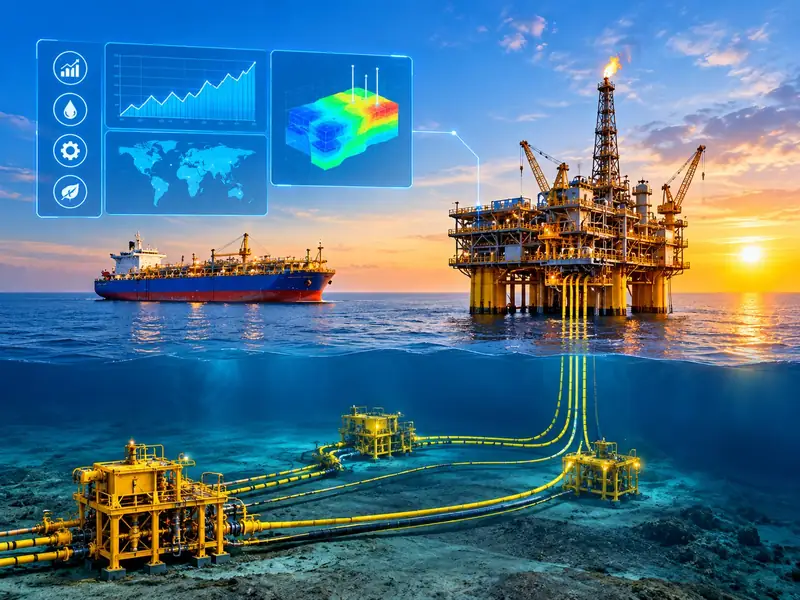
Virtual replicas of reservoirs, wells and facilities that stay in step with field data, for predictive maintenance and scenario simulation.
Why it matters
Field data is spread across historians, simulation models and spreadsheets, so engineers spend time reconciling numbers instead of making decisions.
Simulation models go stale between updates, and equipment problems are often found only after they affect production.
How Encyrex helps
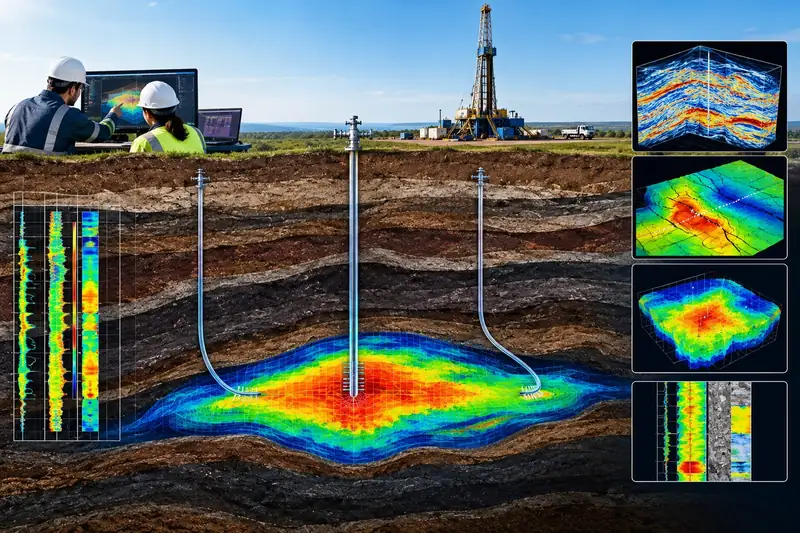
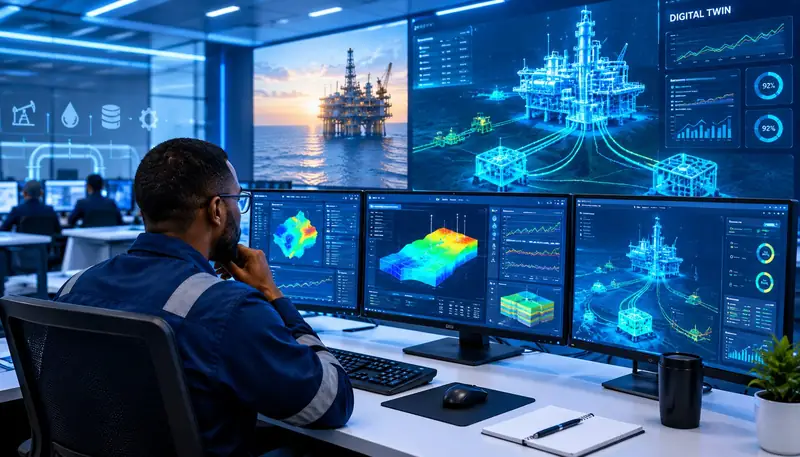
A digital twin connects the physics you already trust with data from the field. We link reservoir, well and facility models to production and sensor data, and use machine-learning surrogates so that scenarios run fast enough to be useful day to day.
The result is a model you can ask what-if questions, and one that flags early signs of equipment or well problems.
Digital twin frameworks are part of our active research and development programme. We're looking for operators and partners to pilot them on a defined asset.
 Interactive prototype
Well Digital Twin
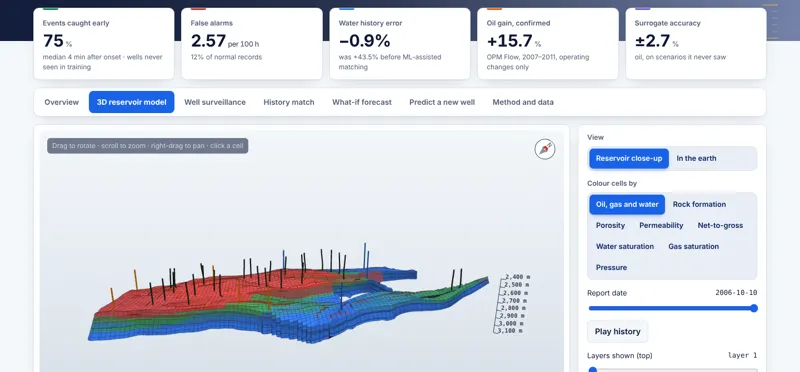
Our Well Digital Twin joins three working parts on open-licensed data. An early-warning model watches pressure and temperature on 40 real offshore wells from the Petrobras 3W dataset and caught 75% of labelled problem events, a median of 4 minutes after onset, on wells it never saw in training.
A 3D simulation model of the Norne field, history-matched with machine learning, cut the water-production error from +44% to under 1%. A what-if engine trained on 22 OPM Flow simulations then found an operating plan that the simulator confirmed at +15.7% oil and −20.6% water over five years.
You can also drill a virtual well anywhere in the matched model and get its first oil, water and gas rates with a ready simulator deck entry, or upload a sensor file from your own well and have the twin score it in your browser.
On a phone or tablet, place the reservoir model on your table in augmented reality, or point the camera at equipment and see the twin's readings and alarms pinned over it.
- Data: Petrobras 3W Dataset 2.0.0 (CC BY 4.0) and the Norne benchmark via OPM (ODbL)
- Models: isolation-forest normal-behaviour model, OPM Flow reservoir simulation, Gaussian-process surrogates
- Explore: 3D reservoir model, well-event replays, history match, what-if forecast, new-well prediction, augmented reality, method and data
From your data to a validated result.
Scope
We agree the asset, the decisions the twin should support, and the data available.
Integrate data
We connect sensor, production and model data into one consistent view.
Build the twin
We combine physics-based models with machine-learning surrogates and calibrate them to history.
Pilot and scale
We run the twin with your team, refine it, and plan how to extend it to more assets.
What we work from
- Sensor and historian data
- Reservoir, well and facility models
- Production history
- Maintenance and equipment records
What you receive
- A pilot digital twin for a defined asset
- A what-if scenario tool for production decisions
- Early-warning indicators for equipment and wells
- A roadmap for scaling across your assets
Typical applications.
Predictive maintenance
Spot equipment problems before they cause downtime.
Scenario testing
Test production and development options before committing.
Integrated planning
Give reservoir, production and facilities teams one shared model.
Training
Let engineers and operators practise decisions safely.