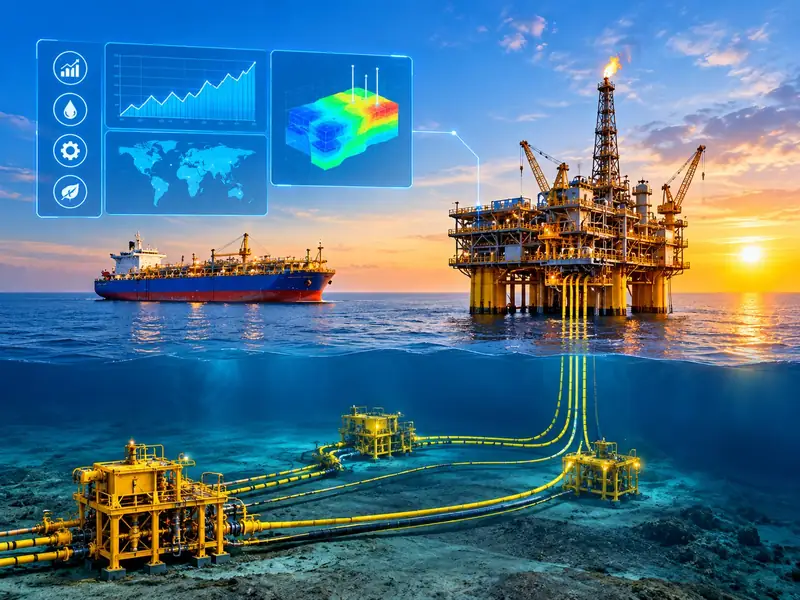
Reservoir Characterization
Machine-learning models that predict permeability and porosity from well logs, giving you a faster, consistent picture of reservoir quality, including in Niger Delta sandstones.
Why it matters
Permeability controls how fluids move, but it is measured directly only on core plugs and in well tests, which cover a small fraction of the reservoir.
Simple porosity–permeability transforms often break down in heterogeneous sandstones. The result is uncertainty that carries through into reservoir models, reserves estimates and development plans.
How Encyrex helps
We use machine-learning methods, including Random Forest and Support Vector Regression (SVR), to learn the relationship between standard well logs and core-measured permeability and porosity. The trained models then predict continuous profiles in uncored intervals and wells.
Most of the accuracy is won or lost in the data preparation, so we pay close attention to log quality control, depth-matching logs to core, and testing on blind wells before anything goes into your models.
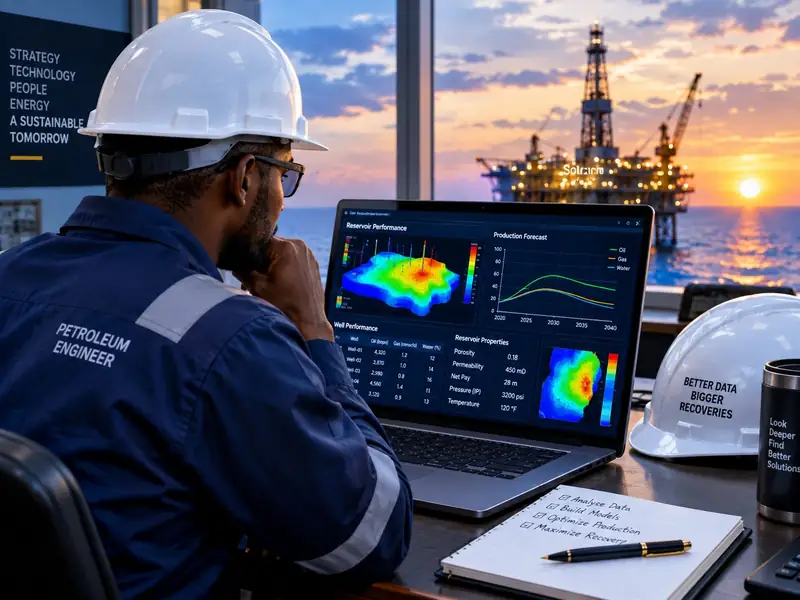
 Interactive prototype
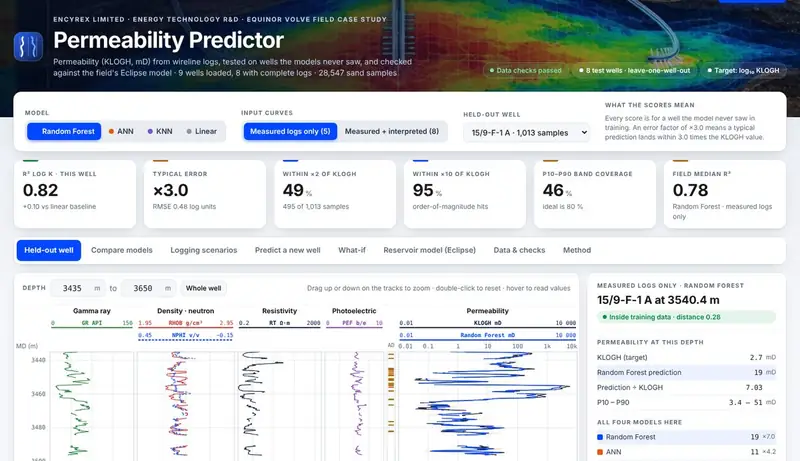
Permeability Predictor
Our Permeability Predictor estimates log-derived permeability (KLOGH) from standard wireline logs on Volve field wells. Random Forest, neural-network, k-nearest-neighbour and linear models are each scored on wells they never saw in training, and the results are checked against the field's Eclipse reservoir model.
Across eight held-out wells, Random Forest using measured logs alone reached a median R² of 0.78 on log permeability. Explore any well's logs and predictions, compare models, try different logging scenarios, and run what-ifs.
- Data: 9 Volve wells, 28,547 sand samples (Equinor Open Data Licence)
- Inputs: gamma ray, density, neutron, resistivity and photoelectric logs
- Explore: held-out wells, model comparison, logging scenarios, what-if, Eclipse model check, new-well prediction
From your data to a validated result.
Data QC
We check log quality, correct depth shifts against core, and agree zonation with your geoscientists.
Model training
We select the most informative logs and train Random Forest and SVR models on cored intervals.
Blind-well validation
We hold out entire wells to measure real predictive skill and quantify uncertainty.
Delivery
We deliver predicted logs ready for your static and dynamic models, plus a technical report.
What we work from
- Wireline logs: gamma ray, density, neutron porosity, resistivity, sonic
- Routine core analysis (permeability and porosity)
- Well tops and zonation
- Well-test permeability, where available
What you receive
- Predicted permeability and porosity logs for every well
- A blind-well validation report with uncertainty ranges
- Feature importance showing which logs drive the predictions
- Property logs ready to populate your geomodel
Typical applications.
Uncored wells
Fill gaps where no core was cut.
Geomodel population
Give static and dynamic models a consistent permeability input.
Completion intervals
Support decisions on where to perforate and complete.
Reserves and recovery
Reduce uncertainty in volumes and recovery estimates.